
| Getting your Trinity Audio player ready... |
Hey friend, if the words “mudroom organization” made you think “I don’t even have a mudroom,” you’re not alone, and it doesn’t matter. Most houses don’t have a dedicated mudroom — what they have is a back door, a front entry, or a stretch of hallway that’s trying to do a mudroom’s job without any of the setup. That’s exactly what we’re fixing.
Here’s how to build a real mudroom organization system, whether you’ve got a whole room for it or just a few feet of wall space.
Figure Out Which Spot Is Doing the Work
Before organizing anything, notice where backpacks, shoes, and coats are already landing — not where you wish they landed, where they really do. That’s your real mudroom, whether it’s a hallway closet, a bench by the garage door, or a patch of floor by the front entry. Fighting that instinct and trying to relocate the drop zone somewhere “better” almost always fails. Working with the spot everyone already uses is a much faster path to something that sticks.
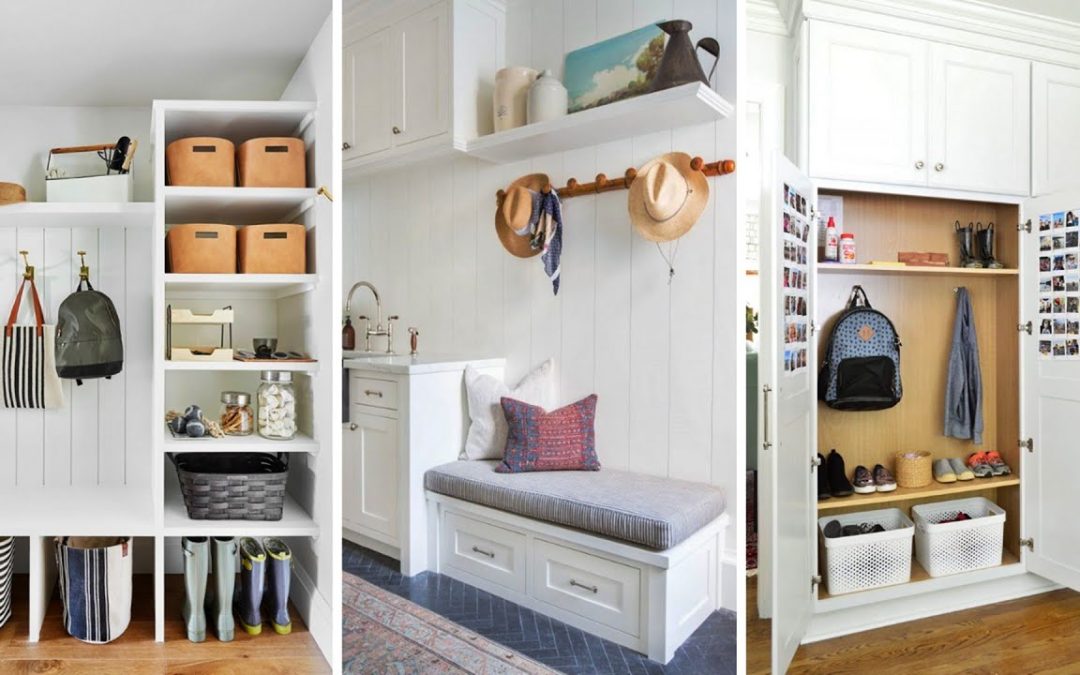
Give Every Kid Their Own Hook, Not a Shared Rod
A single coat rod or a row of unassigned hooks turns into a daily negotiation over whose coat is buried under whose backpack. One labeled hook per kid — at a height they can reach without help — removes that friction completely. If a kid can’t physically reach the hook, they won’t use it, and the coat ends up on the floor instead, so height matters as much as the label does.
One Bin Per Kid for Everything Else
Beyond coats and backpacks, there’s usually a second category of stuff that needs a spot: hats, gloves, mismatched mittens, the occasional stray shoe. One open bin or basket per kid, right below their hook, catches all of it without needing a bin for hats and a separate one for gloves. Simplicity wins here — a kid sorting hats from gloves from scarves into three separate containers is a system that will not survive a rushed morning, but tossing everything into one bin will.
Create One Landing Spot for Papers, Keys, and Mail
Whatever enters the house through this door — permission slips, keys, mail, the odd flyer — needs exactly one spot to land, not three. A single shallow tray or a small wall-mounted pocket organizer works far better than assuming everything will make its way to “wherever it goes” eventually, since without a specific spot, “eventually” usually means the counter, indefinitely.
Add a Bench If You Possibly Can
A bench isn’t a luxury item here — it’s what gets shoes off feet and into a bin instead of abandoned in the middle of the floor. Kids especially are far more likely to sit, take off shoes properly, and put them somewhere specific if there’s a place to sit while doing it. If a full bench doesn’t fit, even a small step stool or an ottoman does enough of the job to matter.
Don’t Forget the Adults in This System
Most mudroom advice focuses entirely on kids’ gear, but adult coats, bags, and shoes need the same treatment, not a vague “wherever there’s room” approach. Give the adults in the house their own hook and bin too, using the same rules — reachable height, one bin, no over-complicated sorting. A system that only accounts for kids’ stuff just means the adult pile ends up on a chair somewhere else in the house instead.
No Dedicated Wall Space? Here’s What Still Works
If there’s no mudroom, no back hallway, and barely any wall space to work with — renters especially run into this — a few options still get the job done. An over-the-door hook rack uses space that’s otherwise completely wasted, without any drilling or wall damage. A freestanding coat rack or a slim shoe bench with a small basket on top can create the same “one spot for everything” effect in a corner of an entryway that has no built-in storage at all. The specific setup matters far less than the underlying rule: one consistent, low-effort spot, wherever it has to live.
Rotate Gear as the Weather Shifts
A mudroom that holds every jacket owned, in every weight, year-round, gets crowded fast and makes the current-weather items harder to find. As the weather shifts through fall, keep only what’s realistically needed for the next few weeks at the hooks and in the bins — lighter jackets now, heavier coats staged nearby but not competing for the same hook space until they’re needed. This is the same logic as any seasonal closet swap, just applied to a much smaller, higher-traffic space.
Build In a 5-Minute Reset, Not a Weekly Overhaul
The habit that keeps a mudroom functional isn’t a big Saturday cleanout. It’s a quick daily reset — coats back on hooks, shoes into bins, papers pulled from backpacks into the mail tray — done while everyone’s already there in the evening, rather than left to pile up until the weekend. Two minutes a day beats a half-hour reset once a week, because the space never gets bad enough to feel like a project.
What This Buys You
None of this is about a picture-perfect entryway. It’s about mornings that don’t start with a hunt for a missing shoe, and evenings that don’t end with backpacks and coats scattered across three different rooms. A mudroom system, even an improvised one in a hallway with no architectural mudroom in sight, is one of the highest-return spaces to get right, precisely because everyone in the house passes through it daily, often at the most rushed moments of the day.
As a decluttering expert and professional organizer I work with clients in person across the Greater Houston area and virtually from anywhere, and a working mudroom system is one of the fastest, most visible changes a family notices in daily life.
Need help with decluttering and/or organization in your home? Book a session here, call 832-271-7608 to get started even faster, or, if you still have questions, complete the form below. I’ll answer them as quickly and completely as possible.

Working with Taya and her team is easy. You can book an appointment easily on her website, or contact her directly at 832-271-7608
- Why an Organizing Plan From an App or AI Falls Apart in a Houston Home - October 12, 2026
- How to Organize Your Baking Supplies Before the Holiday Baking Starts - October 9, 2026
- How to Organize a Nightstand: What Goes on Top, in the Drawer, and Behind It - October 7, 2026