
| Getting your Trinity Audio player ready... |
Hey friend,
Thanksgiving food shopping has a way of showing you what your fridge has been hiding. You come home with a turkey, three kinds of potatoes, cream, butter, and a stack of pies, open the door, and find a shelf of half-used jars, a container nobody can identify, and no space to put any of it. Then it’s Wednesday night, the turkey is still frozen, and every shelf is full.
The fridge and freezer carry the heaviest load of any room in the house this coming month, and they’re the hardest to fix once the shopping is in. The best time to set them up is a few weeks before, while there’s still room to move things around.
Here’s how to get both ready, including what to check first, where the turkey goes, and how to plan for leftovers.
Step One: Empty One Shelf at a Time and Check the Dates
Work shelf by shelf so you’re not dumping out the whole fridge onto the counter. As you take each item out, ask three questions: is it still good, will you use it, and has it earned its space?
Toss anything past its date, anything you can’t identify, and containers of cooked food that have been in there more than three to four days. That is the standard food safety guideline for leftovers, and it’s easy to lose track of in a crowded fridge. Check the condiments too. Most fridges hold several jars of the same thing, opened months apart.
This is the step where most people stall. Every item brings its own small argument: “I might use it,” “it was expensive,” “it’s still mostly full.” Working through them one at a time takes longer than the rest of the project combined, and it’s much easier with someone beside you who can help you decide.
Step Two: Set Zones by What Each Shelf Is For
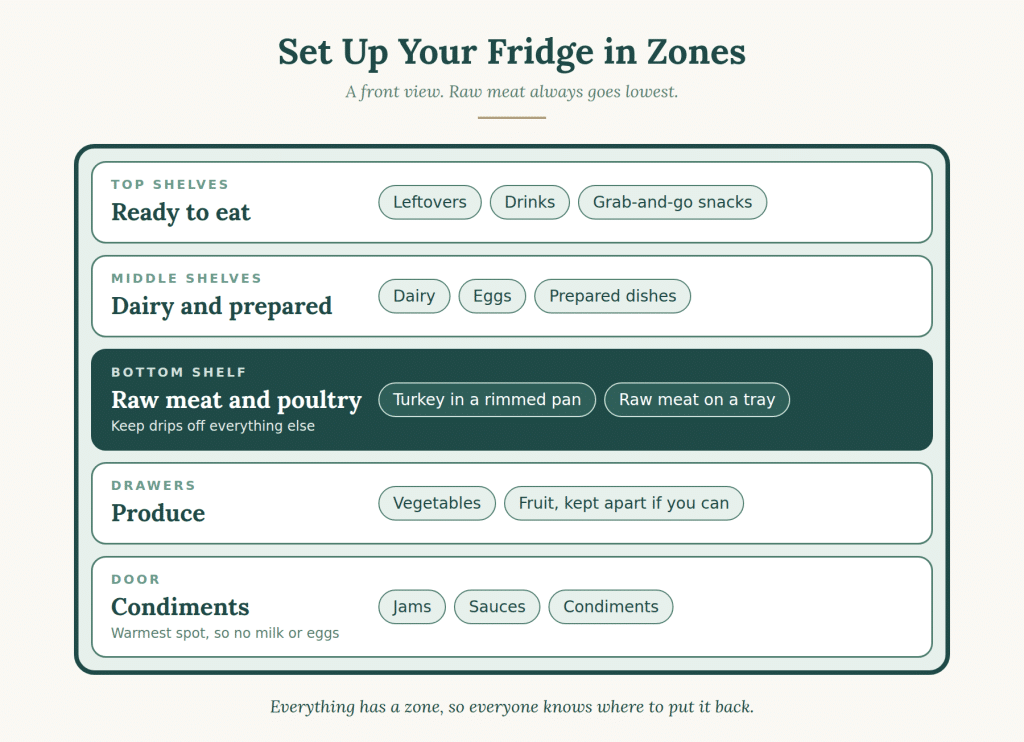
Once the fridge is empty, wipe it down and put things back by zone:
- Top shelves: ready-to-eat foods, leftovers, drinks, and anything you grab quickly.
- Middle shelves: dairy, eggs, and prepared dishes.
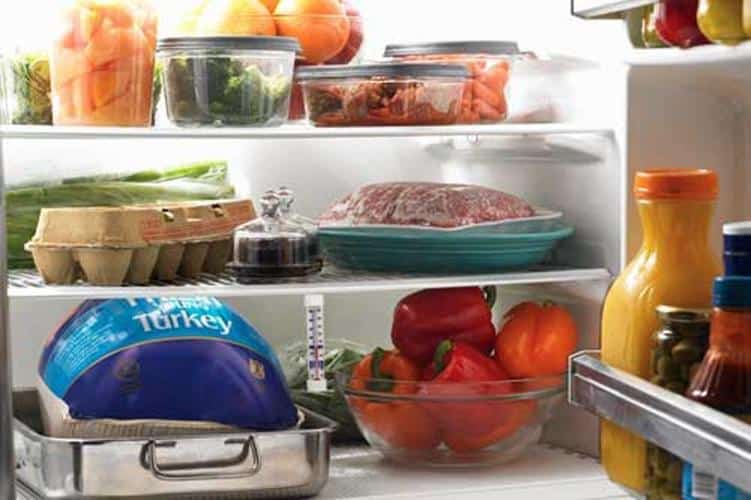
- Bottom shelf: raw meat and poultry, on a tray or in a pan, so nothing drips onto food below it.
- Drawers: produce, with vegetables and fruit kept apart if your drawers allow it.
- Door: condiments, jams, and sauces. The door is the warmest part of the fridge, so keep milk and eggs on the shelves.
When everything has a zone, you can see what you have, and everyone in the house knows where to put things back.
Step Three: Plan the Turkey’s Spot Before You Buy It
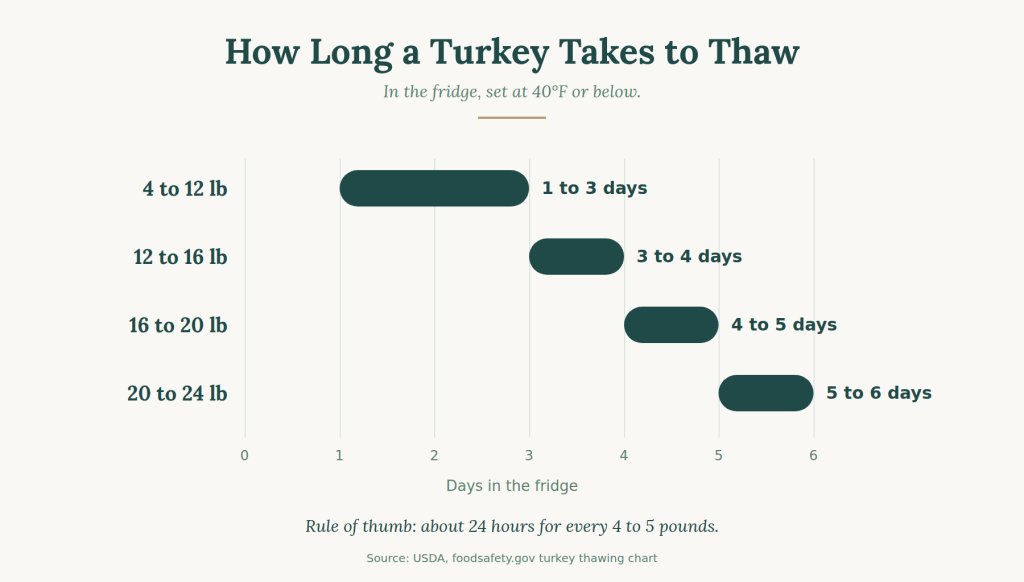
A frozen turkey thaws safely in the fridge, but it takes longer than most people expect. The standard guideline is about 24 hours for every 4 to 5 pounds, so a 16-pound turkey needs about three to four days. That’s a whole shelf, for days, in the middle of the week you’re also fitting in everything else.
Decide now where it goes: the bottom shelf, in a rimmed pan or tray to catch any drips is best by far. Measure the space, and clear it before the turkey comes home. If it isn’t going to fit, plan for it now, not on Sunday night.
Step Four: Take Inventory of the Freezer
The freezer is the part of the kitchen people avoid most, and for the holidays it’s the most useful. Take everything out, group it by type, and write a date on anything that doesn’t have one. Use older items first, and keep a short list on the door of what’s inside.
Set aside space for make-ahead dishes, stock, pie crusts, and bread. Flat freezer bags stack neatly and thaw faster than bulky containers. Keep the freezer at 0°F, and keep it full if you can. A full freezer holds its temperature longer if the power goes out, which matters in Houston through the end of hurricane season.
If you keep a second fridge or freezer in the garage, check that it’s holding temperature. Heat makes garage units work harder, and a thermometer inside will tell you if it’s keeping up.
Step Five: Make a Landing Zone for Leftovers
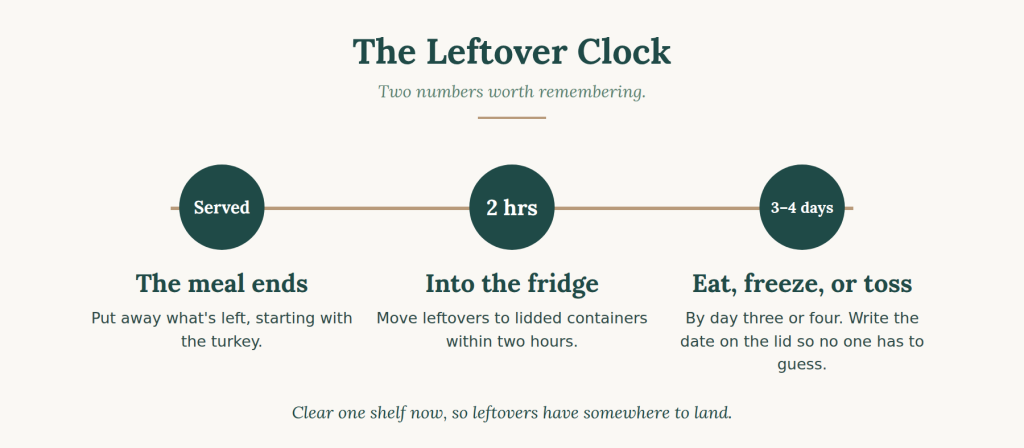
Leftovers should go into the fridge within two hours of being served, and they need somewhere to land. Clear one shelf, or half of one, for them now, and keep it empty until the holiday.
Stock a stack of lidded containers in a few sizes, ideally clear ones so you can see what’s inside. Put a strip of tape and a marker nearby, and label each container with the dish and the date. Leftovers last about three to four days, so a date on the lid takes the guesswork out of it.
Step Six: Take a Look at the Rest of the Kitchen
The fridge is only part of the picture. If your pantry, baking shelf, or spices need attention before the cooking starts, my baking supplies guide and pantry reset cover the rest of the kitchen.
The Shopping List
Measure your shelves first, then buy only what fills a gap. Here’s what I’d look for:
- A fridge and freezer thermometer
- A rimmed tray or pan for thawing a turkey
- Clear lidded containers in several sizes, for leftovers
- Clear fridge bins to group small items
- A turntable for jars and sauces
- Freezer bins or baskets
- Labels and a marker
After the Holiday
A few days after Thanksgiving, go through the fridge once more. Toss any leftovers past the three to four day mark, wipe the shelves, and put the containers back in their place. It takes about ten minutes, and it keeps the fridge ready for the next round of holiday cooking (which, let’s be real here, is just a few weeks away!)
A fridge and freezer clear-out is mostly a set of decisions: what stays, what goes, and where everything lives. But if your kitchen turns into a scramble every time the holidays arrive, no matter how much you plan, that’s the kind of larger organization project I help clients with.
I work through decluttering and organization decisions beside you, then build a setup around how you cook and live. As a decluttering expert and professional organizer I work with clients in person across the Greater Houston area and virtually from anywhere. Book a session here, call 832-271-7608 to get started even faster, or, if you still have questions, complete the form below. I’ll answer them as quickly and completely as possible.

Working with Taya and her team is easy. You can book an appointment easily on her website, or contact her directly at 832-271-7608
- How to Organize Your Fridge and Freezer Before Thanksgiving - October 23, 2026
- How to Set Up Your Guest Room Before Holiday Guests Arrive - October 19, 2026
- How to Organize Your Hall Closet Before Holiday Guests Arrive - October 16, 2026