
| Getting your Trinity Audio player ready... |
Hey friend, if your closet organization stops at the hanging clothes and everything else — shoes in a pile, bags stacked wherever they fit, jewelry tangled in a drawer — gets ignored, you’re in good company. Shoes, bags, and accessories are the part of the closet almost everyone overlooks, and they’re usually causing real daily friction, since they’re what you’re actually reaching for on your way out the door.
Here’s how to actually get this section working.
Shoes: Store Them Upright, Not Stacked
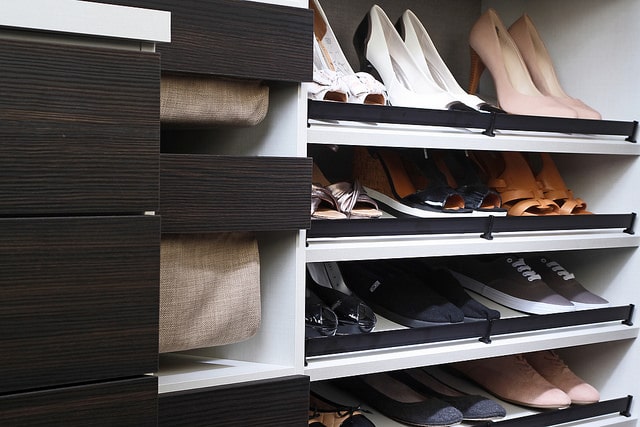
Stacked shoe boxes or piled shoes might save floor space, but they cost you time every single day, since finding one pair usually means moving three others first. A few approaches that hold up better:
- A tiered shoe rack keeps every pair visible and accessible without digging, and it uses vertical space a floor pile wastes entirely.
- Clear shoe boxes, if you prefer boxed storage, let you actually see what’s inside without opening five boxes to find the right one. Opaque boxes might look tidier, but they turn shoe-finding into guesswork.
- Boot shapers or rolled magazines keep tall boots standing upright instead of collapsing into a heap that takes up more space than the boots actually need.
- Rotate seasonally. Off-season shoes — sandals in winter, boots in summer — don’t need prime real estate in the main closet. Move them to a bin on a high shelf or in a closet system’s less-accessible section, and bring them back when the season actually calls for them.
Bags: Structure Keeps Them from Collapsing
An unstructured bag stored flat or squeezed onto an overloaded shelf loses its shape over time, which is a real cost for anything you paid real money for. A few things that protect them and make them easier to grab:
- Stuff bags before storing them — tissue paper, bubble wrap, or even an old t-shirt works — to help them hold their shape instead of caving in on themselves.
- Store upright when possible, on a shelf with dividers or in individual cubbies, rather than stacked flat on top of each other. Stacking flattens structured bags and makes the bottom one impossible to grab without unstacking everything above it.
- Use the dust bags that came with them, or a plain cotton pillowcase if you don’t have the original, especially for anything leather or light-colored that shows dust and discoloration over time.
- Keep your most-used bags at eye level. The bags you reach for constantly shouldn’t be on the highest shelf, and the ones you use twice a year shouldn’t be taking up your most convenient spot.
Accessories: Give Small Things Real Boundaries
Jewelry, belts, scarves, and sunglasses are the items most likely to end up in a single junk drawer, tangled together, because none of them individually seem to justify their own system. That’s exactly why they need one — small items without boundaries create outsized daily frustration relative to their size.
- A jewelry organizer with individual compartments — a tray, a hanging organizer, or a drawer insert — keeps necklaces from tangling and small pieces from disappearing into each other. You can even use small clear hooks attached to a closet door in a push!
- Hooks for belts and scarves on the inside of a closet door use space that’s otherwise completely wasted, and they keep both visible enough to actually get worn instead of forgotten in a drawer.
- A shallow tray or small basket for sunglasses near the door or in the closet prevents the twice-weekly hunt through bags, coat pockets, and car consoles.
Watch for Houston’s Humidity Here Too
Leather shoes, bags, and belts are especially vulnerable to Houston’s humidity — leather can develop mold or mildew faster than most people expect when it’s stored in a closet with poor airflow, especially in an interior closet with no ventilation. A few precautions that genuinely matter here:
- Leave a little breathing room between shoes and bags on a shelf rather than packing them in edge to edge. Airflow matters more in a humid climate than it does elsewhere.
- Use a small closet dehumidifier packet or moisture absorber in any enclosed shoe cabinet or bag storage bin, particularly for anything genuine leather.
- Wipe down leather items periodically, even when they’re not in active use, since sitting untouched in a humid closet for months is exactly when mildew tends to take hold.
Match the Storage to the Closet You Actually Have
A tiered shoe rack or hanging bag organizer that works beautifully in a spacious walk-in can be completely impractical in a small reach-in closet, and a lot of frustration in this part of the closet comes from trying to force a solution built for one layout into the other.
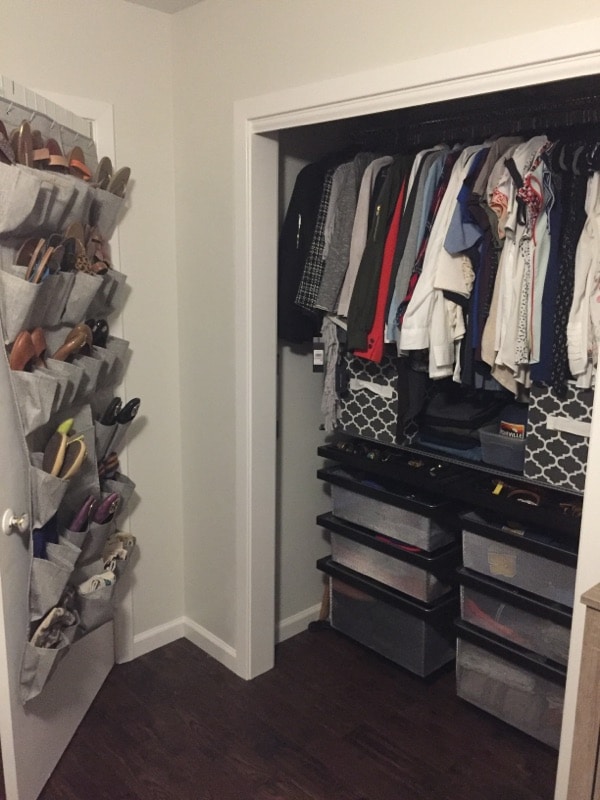
In a reach-in closet, the back of the door is often the most underused space in the entire room — an over-the-door shoe organizer or a set of hooks for bags and belts adds real storage without taking up any floor or shelf space at all. In a walk-in, you usually have the opposite problem: enough space that things spread out and lose organization rather than running out of room, so dedicating specific shelves or cubbies to specific categories — this shelf is shoes, this one is bags, this hook strip is accessories — matters more than it would in a smaller space where there’s nowhere else for things to drift.
If Kids Share the Closet, Give Them Their Own System Too
If this is a shared or kids’ closet, shoes and accessories need a setup that actually matches a child’s height and habits, not just a smaller version of an adult system. A low, open bin or basket at a height a kid can reach without help gets used far more consistently than a rack or shelf that requires a boost every time. The goal for a kid’s shoe storage isn’t a perfect line of pairs — it’s a spot low-effort enough that putting shoes away is actually something they can do themselves, without it turning into another thing an adult has to manage.
This matters even more heading into a new school year, when shoe rotation (outdoor play shoes, indoor sneakers, the occasional dress shoes) picks up and a system that was fine for one or two pairs starts breaking down under four or five.
The Same Rule Applies Here as Everywhere Else
Just like clothes, shoes, bags, and accessories only stay organized if what’s out matches what you actually use. If a shelf is full of bags you haven’t carried in two years, or shoes that no longer fit the life you’re living now, no storage solution will make that section function well. The system works when it’s built around your current habits, not the collection you’ve accumulated.
A simple habit that keeps this from creeping back over time: when a new pair of shoes or a new bag comes in, one existing one goes through the same donate-or-keep filter on its way to a spot. This isn’t a strict rule you need to enforce perfectly — it’s just a check that keeps the section from slowly refilling with things you’ve stopped reaching for, the same way it filled up the first time.
As a decluttering expert and professional organizer I work with clients in person across the Greater Houston area and virtually from anywhere, and closet organization — the whole closet, not just what’s hanging — is genuinely one of my favorite spaces to work in.
Book a session here, call 832-271-7608 to get started even faster, or, if you still have questions, complete the form below. I’ll answer them as quickly and completely as possible.

Working with Taya and her team is easy. You can book an appointment easily on her website, or contact her directly at 832-271-7608
- Why an Organizing Plan From an App or AI Falls Apart in a Houston Home - October 12, 2026
- How to Organize Your Baking Supplies Before the Holiday Baking Starts - October 9, 2026
- How to Organize a Nightstand: What Goes on Top, in the Drawer, and Behind It - October 7, 2026