
| Getting your Trinity Audio player ready... |
Hey friend, today is the statistical peak of hurricane season — the point in the year storms are most likely to form and reach us here on the Gulf Coast. If your hurricane prep kit is still “somewhere in the garage, probably,” now’s the moment to fix that, before a storm is already in the forecast and you’re trying to do this in a panic with everyone else in Houston at the same store.
You might be wondering why a professional organizer is writing about hurricane prep instead of a weather site. Here’s the honest answer: this isn’t about bracing for the worst. It’s the same everyday organizing principle behind everything else I write about, just applied to something predictable about living on the Gulf Coast.
Living here means hurricane season happens every single year, the same way back-to-school happens every fall. Having a system ready ahead of time isn’t about fear — it’s about not having to make two dozen small decisions under stress when you’re already tired, distracted, and possibly without power. That’s exactly the kind of problem organizing solves, whether it’s a pantry, a closet, or in this case a bin in your hall closet.
It’s the same reasoning behind an oil change schedule or replacing your smoke detector batteries — routine seasonal maintenance, not an emergency mindset. Having things ready before you need them beats figuring it out while everyone else in town is doing the same thing at once.
Here’s how to organize this so it holds up when you need it, not just when you set it up.
Start With the Bin, Not the Supplies
Before buying a single item, decide on one dedicated container — a clear, sturdy bin with a lid, not a box, not a random collection of bags in a closet. Cardboard doesn’t survive Houston humidity even in normal storage, let alone in an emergency where the bin might get wet or need to travel with you. Keep it somewhere you can grab in under a minute: a hall closet, not the back of the garage behind the holiday decorations.
The Core Supply List
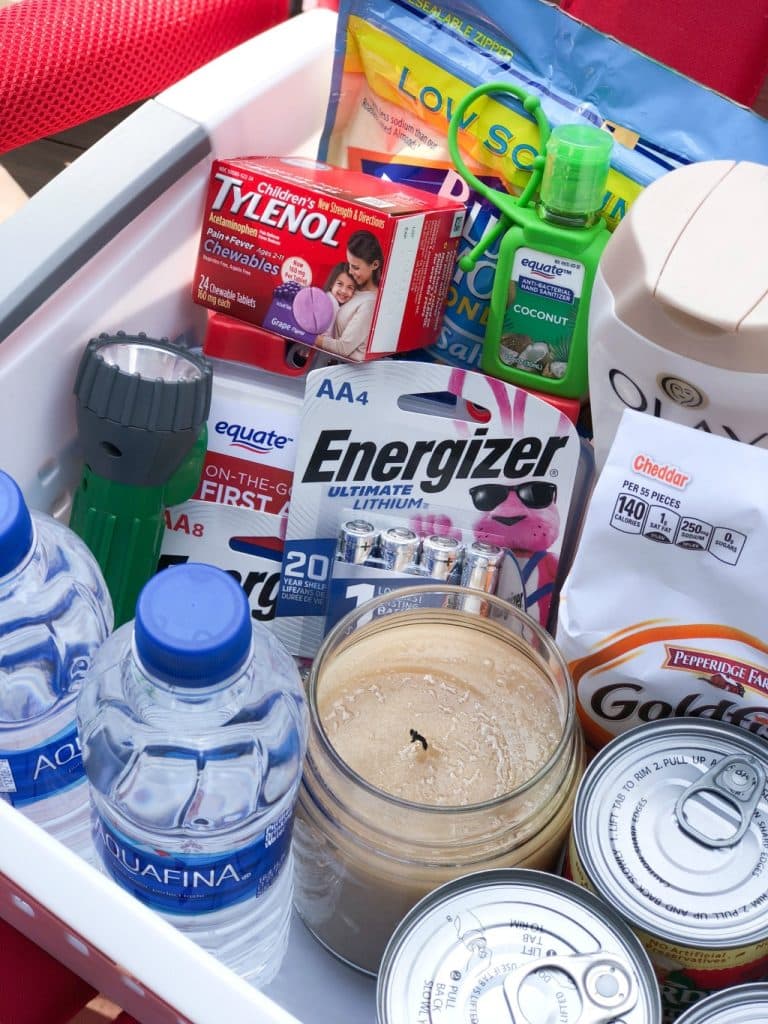
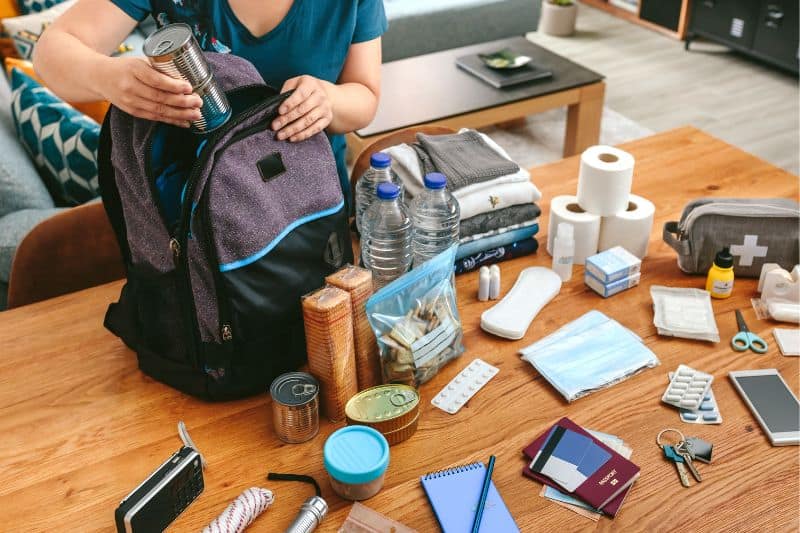
This is the part most checklists jump straight to, and it’s worth having in one place before you start organizing any of it:
- Water — see the amount breakdown below
- Non-perishable food for at least 3 days, plus a manual can opener (an electric one is useless without power)
- Flashlights and extra batteries — not candles, which are a real fire risk if you’re not paying close attention
- A battery-powered or hand-crank radio, for updates if cell service and wifi are both down
- A basic first aid kit, plus any prescription medications, clearly labeled
- Toilet paper, paper towels, and disposable plates, cups, and utensils — dishwashing isn’t realistic without running water
- Trash bags and basic sanitation supplies, including hand sanitizer and wipes
- A cooler and ice packs, useful both for keeping medication cold and for food once refrigeration is unreliable
- Cash in small bills, since card readers and ATMs may be down along with the power
- Phone chargers and a portable battery pack
None of this needs to be expensive or elaborate. It needs to actually be in one place, checked yearly, so you’re not piecing it together from three different stores the same week everyone else in Houston is doing the exact same thing.
Documents First — This Is the Part People Skip
The single most overlooked part of hurricane prep isn’t water or flashlights. It’s paperwork, and it’s the part that causes the most stress afterward if it’s missing. Put together a waterproof document folder or a small fireproof lockbox with:
- Insurance policies — homeowner’s or renter’s, flood, and auto
- ID copies — driver’s license, passports, Social Security cards (copies, not the only originals if you can help it)
- Medical information — prescription lists, immunization records, any critical medical details for family members
- A printed contact list — phone numbers for family, insurance agents, and your bank, since a dead phone means a memorized contact list is useless
Keep this folder inside the prep bin, not in a filing cabinet elsewhere in the house. In a real evacuation, you want one thing to grab, not three separate systems to remember.
The Go-Bag Doesn’t Need to Be Fancy
A duffel bag or backpack per family member, kept near the prep bin rather than scattered through everyone’s closets. A reasonable starting checklist per person:
- 3 days of clothes, including a change of shoes
- Basic toiletries — toothbrush, soap, any daily medications
- A phone charger and battery pack, since outlets may not be available
- Cash in small bills, since card readers may be down along with the power
- A comfort item for kids — one favorite toy or blanket, decided in advance so it’s not a scramble
The goal isn’t a perfectly curated bag. It’s not having to think clearly under pressure about what to pack when a storm’s already been named.
Rotate the Supplies, Don’t Just Buy Once
Water, batteries, and non-perishable food all have real shelf lives, and a prep kit assembled three years ago and never checked again isn’t reliable. Put a reminder on your calendar for the start of hurricane season each year — June is a good marker — to pull everything out, check expiration dates, replace batteries, and confirm the water hasn’t degraded. This is the same principle behind any organizing system: it only works if it’s rechecked, not just built once and trusted forever.
Keep a Physical Checklist Inside the Bin
Even with everything organized, the days before a storm are chaotic, and a printed checklist taped inside the lid removes the need to remember everything from scratch under stress. List what’s already in the bin, and a short list of last-minute items to grab on the way out — phone chargers, any remaining perishables, pet supplies if applicable.
One Small System for Pets
If you have pets, their supplies deserve their own small, dedicated pouch inside or next to the main bin — a few days of food, any medications, a copy of vaccination records, and a leash or carrier staged somewhere accessible. Pet needs are one of the most common things forgotten in a rushed evacuation, precisely because they’re not part of most generic prep checklists.
How Much Water You Really Need
A common mistake is under-buying water because a case or two feels like plenty until you sit down and do the math. The standard recommendation is one gallon per person, per day, for at least three days — more if you have pets, medical needs, or want a real cushion. For a family of four, that’s a minimum of 12 gallons, which takes up more space than most people initially plan for. Store it somewhere stable and out of direct sunlight, and treat it the same as the rest of the kit: check it during your annual rotation, since plastic containers can degrade over years even if the water itself doesn’t spoil the way food does.
Back Up What You Can’t Fit in the Bin
Not everything important fits in a physical container, and some of what matters most — photos of your home’s condition before a storm, digital copies of the documents in your folder, serial numbers for major appliances and electronics — is worth having backed up somewhere that isn’t tied to the house at all. A simple pass with your phone, photographing each room and any valuable items, then saving those photos to cloud storage rather than just your phone’s camera roll, takes twenty minutes and can matter enormously for insurance claims later. The same goes for scanning or photographing the documents in your emergency folder — a digital backup means you still have access even if the physical folder is ever lost or damaged.
Set a Family Communication Plan Now, Not During a Storm
Part of hurricane prep that has nothing to do with supplies: knowing the plan if your family gets separated or needs to evacuate on short notice. Pick an out-of-area contact — someone outside the region who’s less likely to be affected by the same storm — that everyone in the family knows to call or text if local lines are down. Agree on a meeting point if you can’t get home, and make sure older kids or anyone who might be alone during an evacuation knows the plan too, not just the adults. This costs nothing and takes one conversation, but it’s the kind of thing that’s much harder to sort out in the moment than it is to decide calmly in advance.
This Isn’t a One-and-Done Project
The value of hurricane prep isn’t the bin looking complete today. It’s whether it’s still complete, current, and easy to grab in October, or next June, or whenever the next storm threatens the Gulf Coast. A kit that’s technically been assembled once but never rechecked is really just a box of good intentions from a previous year — the same way any organizing system quietly stops working the moment nobody revisits it. Building this now, while there’s no active storm and no pressure, is what makes it something you can rely on later, instead of something you’re troubleshooting while also watching the forecast.
As a decluttering expert and professional organizer I work with clients in person across the Greater Houston area and virtually from anywhere, and building systems that hold up under real pressure — not just on an easy day — is exactly the kind of work I do.
Book a session here, call 832-271-7608 to get started even faster, or, if you still have questions, complete the form below. I’ll answer them as quickly and completely as possible.

Working with Taya and her team is easy. You can book an appointment easily on her website, or contact her directly at 832-271-7608
- How to Organize Your Fridge and Freezer Before Thanksgiving - October 23, 2026
- How to Set Up Your Guest Room Before Holiday Guests Arrive - October 19, 2026
- How to Organize Your Hall Closet Before Holiday Guests Arrive - October 16, 2026