
| Getting your Trinity Audio player ready... |
In most of the country, a fall closet swap means boxing up shorts and sandals and pulling out sweaters. In Houston, it doesn’t work that way. We get a cold front, then a week of 85 degrees, then another cold front. You might need to wear a jacket in the morning and shorts by 3pm.
That’s why a full swap, where one season goes away and the next comes out, usually backfires here. You end up digging through a bin in November for a short-sleeve shirt. The better approach is a partial swap: keep what you wear year-round within reach, and move out only what you won’t touch until spring.
It still takes more thought than most people expect, because the hard part isn’t the hangers. It’s deciding what stays, what goes, and what earns a place in a closet that has to work in 85-degree weather and 45-degree weather. Here’s how the swap works for Houston, and where most people get stuck.
Step One: Edit Before You Organize
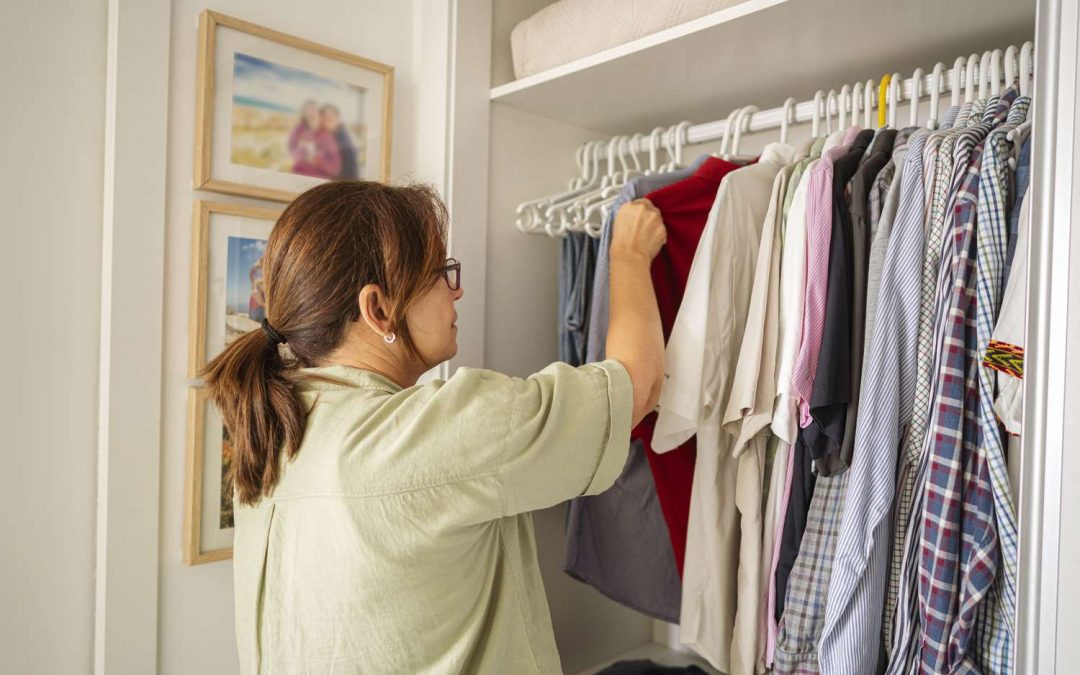
Before anything gets moved, take out everything you’re deciding on. Pull the clothes you haven’t worn since last fall, and try on anything you’re unsure about. Sort what you see into three piles:
- Keep and wear now: what fits, feels good, and gets worn.
- Keep, but not until spring: heavy coats, thick sweaters, and anything you only wear when it’s under 50 degrees.
- Goes out: items that don’t fit, are worn out, stained, or that you’ve passed over all year. If you’re not sure, ask whether it has earned its space.
Making these decisions first matters, because anything you store without deciding on it just moves the problem to another closet. It’s also the step where most closet projects stall. Each item brings its own questions: “I might wear it again,” “it was expensive,” “it might fit someday.” Working through them one at a time is slow, and it’s much easier with someone beside you who can help you decide.
Step Two: Decide What Counts as Year-Round
In Houston, a surprising amount of your wardrobe works in all seasons. Lightweight layers, long-sleeve tees, thin cardigans, jeans, and light jackets can stay in the main closet from September through April. So can a rain jacket.
The test is simple: if there’s a realistic chance you’ll wear it in the next two months, it stays accessible. Only the things that need a real cold snap, like heavy wool coats and bulky knits, are candidates for storage.
Step Three: Clean Before You Store
Stored clothes should go away clean. Body oils, perfume, and small stains you can’t see now will set and darken over several months, and in humid weather, they can attract mildew. Wash or dry-clean anything heading to storage, and make sure it’s fully dry before it goes into a bag or bin.
Skip the fabric softener and starch on stored items, as both can attract pests. Mend loose buttons and hems while you’re at it, so the item is ready to wear when you pull it out.
Step Four: Choose the Right Place to Store
Where you store matters as much as how. Houston heat and humidity are hard on fabric, leather, and cardboard, so avoid the garage and the attic. I covered this in what not to store in a Houston garage or attic.
Use an interior closet, such as a bedroom, hall, or spare room closet. The air-conditioned part of the house has the most stable temperature and humidity.
- Breathable garment bags for coats and structured pieces, hung on a rod.
- Lidded bins for folded knits, labeled on the front, kept on a high shelf.
- Avoid sealed plastic for wool or leather, which can trap moisture. Choose bins with some airflow, or add a moisture absorber.
If you don’t have space in another closet, a rolling garment rack with a cover in a spare room works well, and so does the guest room closet. I wrote about how to set one up in how to set up your guest room before holiday guests arrive.
Step Five: Put the Season’s Items Where You Reach First
Now set up the closet you’ll use every day. The front and eye level go to what you wear most right now:
- Hang cooler-weather layers at the front of the rod: light jackets, cardigans, and long-sleeve tops.
- Fold sweaters on a shelf instead of hanging them, so the shoulders keep their shape.
- Put boots at the front of the shoe area and move sandals you’re not wearing toward the back.
- Keep a hook or a short section of rod by the door for the jacket you grab on the way out.
If you can only see half the closet when you open the door, you’ll wear half of it. Keep the front open to what you’ll wear this week.
Step Six: Use Matching Hangers
It’s a small change that makes the whole closet easier to use. Swap mismatched wire and plastic hangers for one style. Matching hangers make the rod look calmer, and slim ones give you more room, so you can see each piece. Use sturdy wide-shoulder hangers for coats and jackets.
The Shopping List
Measure your rod and shelves first, then buy only what fills a gap. Here’s what I’d look for:
- Breathable garment bags for coats
- Lidded bins for folded knits
- Matching slim hangers
- Sturdy wide-shoulder hangers for coats
- A moisture absorber for the storage closet
- A shelf divider for folded sweaters
- Labels for the front of the bins
The Two-Minute Evening Reset
When you wear a sweater or jacket, put it back at the end of the day, not on a chair. Reset before you rest. A two-minute reset each evening keeps the closet working through the whole season, and it makes the spring swap easier.
A swap like this goes well when the decisions are made and the setup fits how you dress and live. If your closet is overfull, you keep reorganizing it and it slides back, or you can’t face the sorting, that’s the work I do with clients. I go through it with you, item by item, then build a closet setup around your routine and your Houston weather, so it holds up when life gets busy. As a decluttering expert and professional organizer I work with clients in person across the Greater Houston area and virtually from anywhere. Book a session here, call 832-271-7608 to get started even faster, or, if you still have questions, complete the form below. I’ll answer them as quickly and completely as possible.

- How to Do a Fall Closet Swap in Houston - October 21, 2026
- Garage Organization Tips for Storing Summer Gear - September 14, 2026
- How to Declutter Your Closet: What to Keep, What to Let Go, and Why It’s Harder Than It Should Be - July 21, 2026