
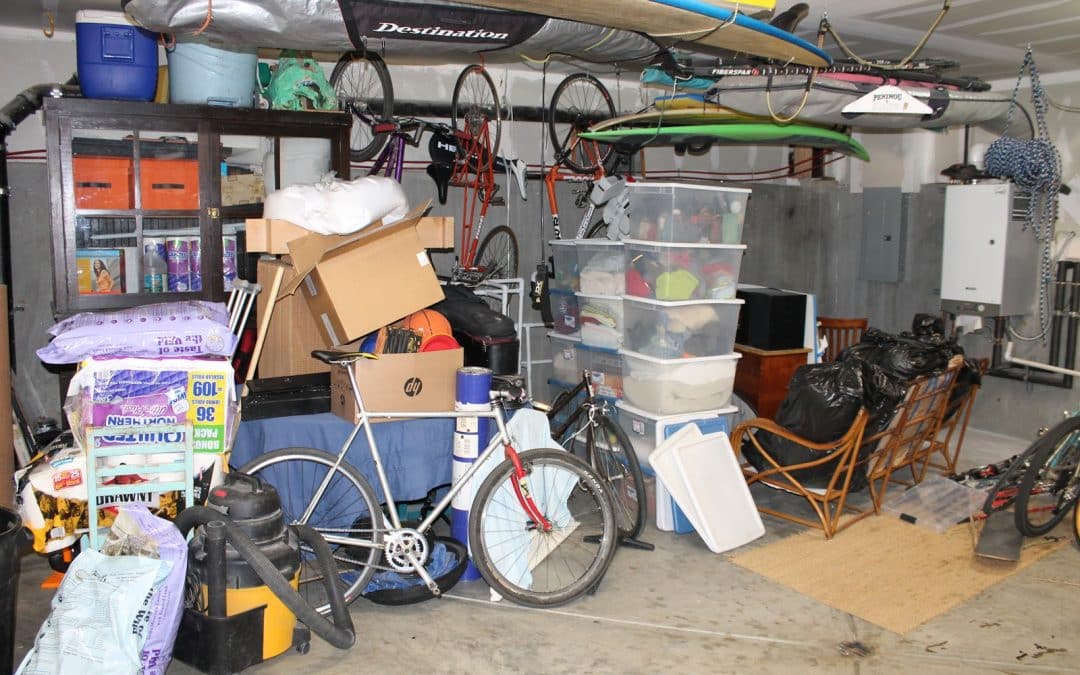
You organized your garage. It looked amazing. You could actually park your car in it.
Three months later, it’s chaos again.
Not because you’re messy. Not because you bought more stuff. Not because you “didn’t maintain the system.”
Because the seasons changed, and your garage reorganized itself.
This is the pattern I see often in Houston garages I walk into: it works beautifully for one season, then completely falls apart when the weather shifts.
And here’s what most people don’t realize—this isn’t a maintenance problem. It’s a design problem.
What Actually Happens
Let me guess what your garage looks like right now in early February.
Your pool floaties are still taking up prime real estate even though nobody’s swimming. Your holiday decorations are blocking access to things you actually need. Your lawn care equipment is buried behind summer toys. Your camping gear from last fall is exactly where you left it—in everyone’s way.
And you keep telling yourself you’ll “do a quick reorganization this weekend.”
But you won’t. Because you’re not lazy—you’re exhausted from fighting a garage that wasn’t designed for seasonal rotation in the first place.
The Three-Month Cycle
Here’s the cycle I see constantly:
January-March: Your garage is full of holiday storage, winter gear you barely use in Houston, and outdoor furniture that came inside “just in case.” You’re constantly moving boxes to get to your lawn mower because spring yard work doesn’t care that it’s technically still winter.
April-June: Pool season hits. Suddenly you need easy access to floaties, pool chemicals, outdoor toys, and all that summer equipment. But where do you put the stuff that was there before? It gets shoved to the back. Into corners. On top of other things.
July-September: You’re living in your garage now because everything outdoor-related lives there. Sports equipment, camping gear, gardening supplies, grilling tools. It’s functional chaos—you can find what you need, but it takes moving three other things first.
October-December: Holiday decorations come out. Fall yard work. Winter prep (even in Houston, we pretend). And now you’re playing Tetris with bins, trying to figure out where to put summer stuff while making room for seasonal items.
By January, you’re back where you started. Except now, you’re also tired.
Why “Just Reorganizing” Doesn’t Fix It
Every three months, you reorganize. You move things around. You create a new system based on what you need right now.
And every three months, it falls apart again when the next season hits.
Because you’re not solving the actual problem. You’re just responding to symptoms.
The real issue? Your garage has no rotation system. No plan for where things go when they’re not in season. No designated zones for active use versus storage. No strategy for managing the constant shift between what you need now and what you’ll need later.
So you end up with seasonal items scattered everywhere, active-use items buried under out-of-season stuff, and a constant feeling that your garage is working against you instead of for you.
The Questions Your Garage Can’t Answer
When I walk into a garage that’s stuck in the three-month reorganization cycle, I ask these questions—and the garage usually can’t answer them:
Where do pool items live when it’s not pool season?
Where does holiday decor go after January that doesn’t block access to daily-use items?
Where do you put lawn equipment during peak outdoor season without sacrificing access to outdoor toys?
Which items need to be accessible year-round, and which ones can truly be stored away for months at a time?
How do you rotate seasonal items without having to reorganize the entire garage every single time?
If your garage can’t answer these questions clearly, you’re going to keep reorganizing every three months. Forever.
What I See in Garages That Work
The garages that don’t reorganize themselves every season have something specific in common.
And it’s not more space. It’s not better shelving. It’s not even fewer items.
It’s a rotation system that accounts for Houston’s unique seasons and the reality that you don’t use everything year-round with equal frequency.
These garages have designated zones for different seasonal categories. They have a plan for what’s active versus stored. They have accessible spots for rotation items and long-term storage for truly seasonal stuff.
But here’s the thing: you can’t see that plan just by looking at the garage. The organization looks simple. Almost obvious.
That’s how you know it’s working.
The Real Problem Nobody Talks About
In Houston, our “seasons” don’t match what standard organizing advice tells you.
We have pool season and not-pool season. We have yard work season that lasts nine months. We have “holiday decorations” season and “it’s too hot to decorate” season.
So when you follow generic garage organizing advice that talks about winter storage and summer storage like they’re neat little three-month boxes, it doesn’t work here.
Your garage keeps reorganizing itself because the system you built wasn’t designed for how Houston actually lives.
Why This Matters
You’re not failing at garage organization.
Your garage is failing you because it’s trying to operate without a rotation system that matches your actual seasonal patterns.
Every time you reorganize, you’re working harder to compensate for a design flaw—not a maintenance issue.
And until that gets fixed, you’ll be reorganizing every three months. Indefinitely.
The Pattern You’re Stuck In
Let me describe your last year:
January: Reorganized after the holidays. Felt great.
April: Reorganized for summer. Felt necessary.
July: Reorganized because nothing was accessible anymore. Felt exhausting.
October: Reorganized for the holidays. Felt defeating.
January: Back where you started.
That’s not a maintenance problem. That’s a system that’s fundamentally broken.
What You’re Really Dealing With
When your garage reorganizes itself every three months, you’re not dealing with clutter.
You’re dealing with a space that has no functional plan for seasonal rotation.
You’re dealing with zones that don’t account for variable access needs.
You’re dealing with storage that doesn’t differentiate between “I need this monthly” and “I need this twice a year.”
You can buy more bins. Install more shelving. Label everything beautifully.
But if the underlying rotation system doesn’t exist, you’ll be reorganizing again in three months.
When You’re Ready
If you’re tired of reorganizing your garage every time the season changes, that’s not a motivation problem.
That’s a signal that your garage needs a rotation system, not another weekend of moving boxes around.
Because the garages that stay organized through seasonal changes? They weren’t organized harder. They were organized with a plan for rotation built in from the start.
And that’s a completely different approach than what you’ve been trying.
Ready to stop the seasonal reorganization cycle?
At Just Organized by Taya, we don’t just organize garages—we design rotation systems that work with Houston’s actual seasons. No more chaos every three months. No more moving the same boxes four times a year.
Schedule your garage consultation or call 832-271-7608.
Serving Houston in-home & virtual organizing sessions.

Working with Taya and her team is easy. You can book an appointment easily on her website, or contact her directly at 832-271-7608