
| Getting your Trinity Audio player ready... |
Within my Calm Reset ™ system the daily resets keep your home from drifting. The weekly resets catch what builds up over seven days. The monthly check-in catches the slow degradation of your systems.
But there’s one more thing none of those can touch. Something that happens so gradually you can go years without noticing.
Your life changes. And your home doesn’t keep up.
The kids who were in diapers are now in school. The hobby you picked up during lockdown is now over. The kitchen gadgets you bought for that phase of clean eating have been sitting in the back of the cabinet for eighteen months. The guest room became a storage room and also became a place nobody goes.
None of these changes were dramatic. They just happened. And while they were happening, your home — the physical space you live in every day — stayed set up for a version of your life that no longer exists.
That’s what the seasonal reset is for. Four times a year. Five big-picture reviews. This is The Calm Reset™ making sure your home is actually serving the life you’re living right now — not the one you were living three years ago.
Seasonal Review #1: Walk Every Room and Note What’s Not Working

This is the diagnostic pass. You’re not fixing anything yet. You’re just looking.
Walk every room in your home with fresh eyes. Pretend you’re seeing it for the first time. What do you notice? What’s not working? Where is stuff accumulating that shouldn’t be? What do you walk past every day without questioning — because you’ve stopped seeing it entirely?
The problem with your own home is that you live in it. Everything becomes invisible after a while. The pile on the dining table has been there so long it’s part of the landscape. The drawer that doesn’t close properly is just how that drawer is now. The corner of the bedroom where things migrate is just where things go.
A seasonal walk-through — intentional, slow, with fresh eyes — is how you see your home the way I’d see it on a first visit. And that perspective is the starting point for everything else.
Bring a notebook. Write down what you notice. Don’t try to solve anything yet. Just see it clearly. The solutions come later. First you have to know what the problems are.
This takes maybe fifteen minutes. And most people are surprised by what they find once they actually stop and look.
Seasonal Review #2: Assess What You Wore vs. What Took Up Space

In Houston, the seasonal wardrobe review is different from what you’d do in a four-season climate. We don’t have dramatic seasons. Winter clothes don’t go away for six months because winter doesn’t really happen for six months. Everything stays in rotation year-round, which means your closet is constantly carrying a heavier load than closets in cities with real seasons.
That makes this review even more important here. Because the clothes that aren’t earning their space are still taking up prime closet real estate all year.
The question is simple: over the last three months, what did you actually wear? What kept earning its spot in your rotation? And what just sat there taking up space?
Be honest. The rule isn’t “would I wear this?” The rule is “did I wear this?” In ninety days of every possible Houston weather scenario, did this piece of clothing actually leave the closet and go on my body?
If the answer is no — and no again — it’s telling you something. Maybe it’s not your style anymore. Maybe it doesn’t fit the way you remember. Maybe it was a mistake purchase you never got around to letting go of. Whatever the reason, it didn’t earn its place this season.
Let it go. Create space for the things that actually work for the life you’re living now.
I wrote a whole framework for this in my post on the spring closet cleanout — the decision rules that make the maybe pile disappear. Apply them here. Four times a year. Small corrections before they become a full crisis.
Seasonal Review #3: Check the Garage for Damage and Unused Items
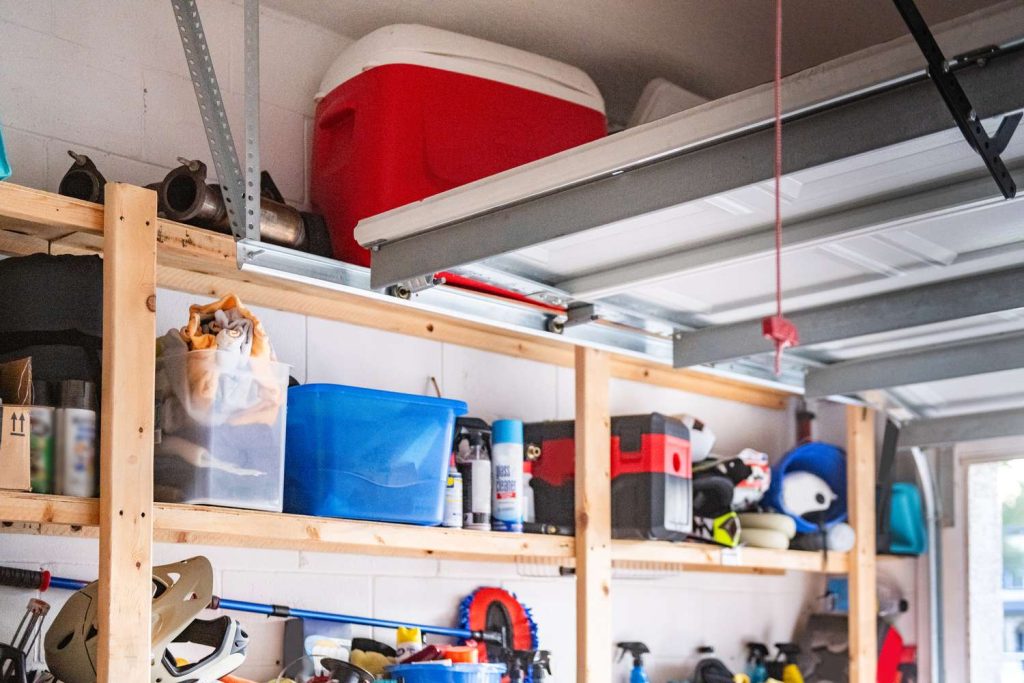
If you’ve been reading this blog, you know I have a lot to say about Houston garages. Our heat, humidity, and pest pressure do things to stored items that people don’t notice until they finally go looking.
The seasonal garage check isn’t a full reorganization. It’s a damage assessment and a usage review.
Damage first. Walk through and check anything you’ve been storing for a while. Has anything been affected by heat? Humidity? Pests? Open a few bins you haven’t opened in a while and look. In Houston, you should be doing this before summer and after summer, minimum. Things that were fine in March are not necessarily fine in October.
Catching damage early means you can save what’s salvageable and let go of what isn’t. Finding it later — when you finally open the box to look for something — usually means the damage is irreversible and the item is gone. I’ve written about this before and I’ll keep writing about it because it happens in Houston garages constantly.
Then the usage review. What’s in the garage that you haven’t touched since the last seasonal check? What’s there because it has a purpose, and what’s there because you didn’t know where else to put it? What’s being stored for a version of your life that’s over?
The garage is the room where life-stage transitions pile up. Baby gear when the kids are in school. Hobby equipment for hobbies that ended. Sports gear for sports nobody plays anymore. Tools for projects that never happened. If the garage is where your old selves go to live, the seasonal check is how you visit them and decide who gets to stay.
Seasonal Review #4: Stop Storing Things for a Life You’re Not Living
This is the big one. And it’s the one most people skip, because it’s emotionally harder than any of the others.
Walk through your home with one question: is this set up for the life I’m actually living right now?
Not the life you used to live. Not the life you thought you’d be living. Not the aspirational life you’re hoping to eventually grow into. The actual, current, real-time life you have today.
Because here’s what I see in every long-term home I walk into: people storing things for versions of themselves that no longer exist.
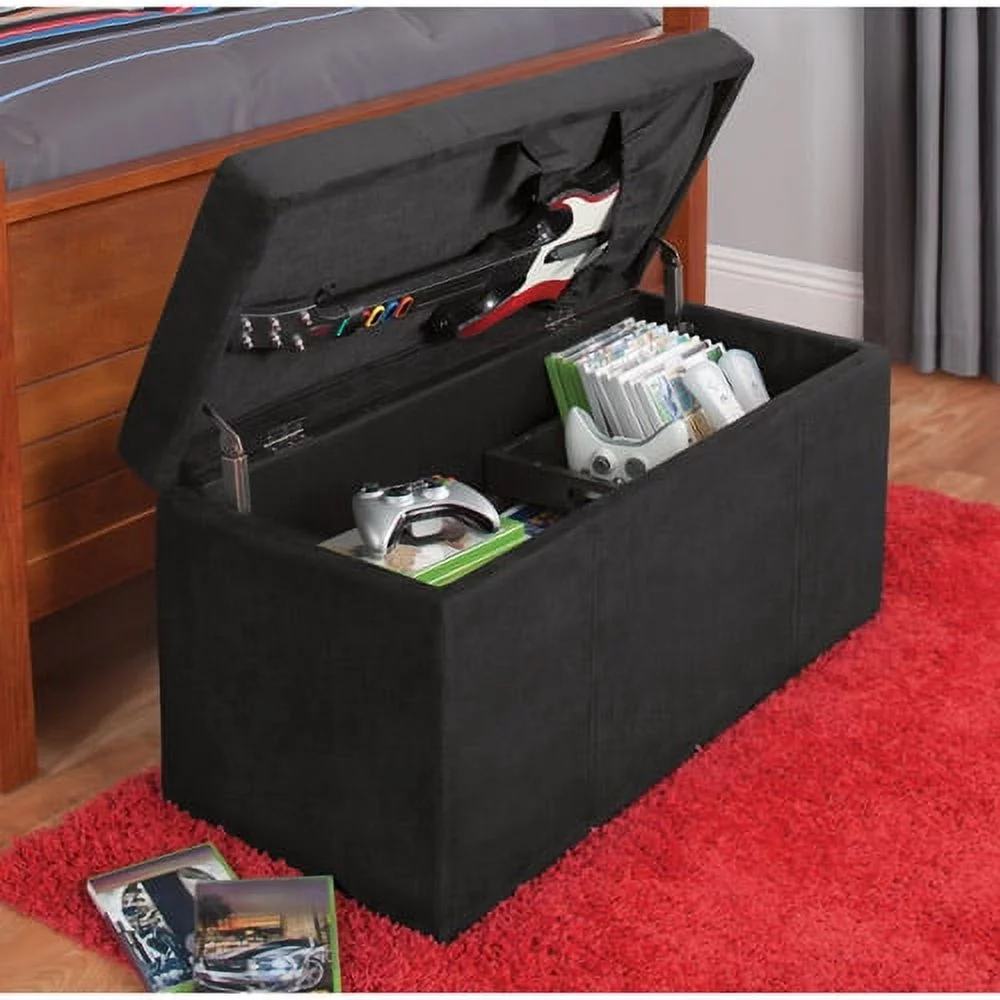
The crib in the attic when the youngest is seven. The sewing machine from when you were going to learn how to sew. The wine collection from before you stopped drinking. The formal dining set from the version of entertaining you don’t do anymore. The fitness equipment from the year you were going to get really into home workouts. The craft supplies for the Pinterest projects you never actually did.
None of this is bad. It’s just from a different chapter. And when your home is full of objects from past chapters, there’s less room — physical and mental — for the chapter you’re actually in.
The seasonal life-stage audit is permission to close those chapters. Not forever. Just in your storage. If your life changes again and you need the thing again, you can get the thing again. But right now, you’re paying for it — in square footage, in mental weight, in the constant background hum of objects you walk past every day that don’t serve you anymore.
This review is hard. It takes longer than the others. And it’s the most impactful one on this entire list. Because a home that’s aligned with your current life functions completely differently than one carrying the weight of five previous versions of yourself.
Seasonal Review #5: Check Which Organizing Systems Need Rebuilding
Every organizing system has a shelf life.
I know that’s not what people want to hear. They want to believe that once they get organized, it’s done. That’s not how it works. Organizing systems are built for specific moments — for the family you had then, the stuff you owned then, the life you were living then. When those things change, the systems need to change too.
The seasonal system review is where you ask: which of my organizing systems are still working, and which ones are quietly broken?
Look at the systems you have in place. The kitchen organization. The closet setup. The paper processing flow. The kids’ toy storage. The pantry zones. The bathroom cabinet layout.
For each one, ask two questions: does this still match how I use this space? And is it actually holding up, or am I compensating for it?
If you’re finding workarounds — always pulling things out to get to other things, always cramming items in where they don’t quite fit, always re-sorting the same drawer — that’s a system that’s failed. The fact that you’ve been making it work through effort doesn’t mean it’s working. It means you’re doing the work the system should be doing.
Identify the systems that need rebuilding. You don’t have to rebuild them today. Just name them. Write them down. And commit to addressing one per season, starting with the one causing the most friction.
A system that worked perfectly two years ago might be completely wrong for your life now. That’s not a failure. That’s just what happens when life moves and you don’t rebuild to match.
The Seasonal Investment
Five reviews. Four times a year.
This isn’t a thirty-minute task. The seasonal reset takes longer than the daily, weekly, or monthly resets because it’s doing more. Plan on a couple of hours, spread across a day or a weekend. Do it with coffee. Do it with music. Do it with intention.
And then let your home come into alignment with the life you’re actually living — four times a year, forever.
When the Seasonal Review Shows You Something Big

If you do the seasonal review and discover that most of your home isn’t aligned with your current life — that you’re carrying years of accumulated past chapters, that multiple systems are broken, that the garage is full of things from previous versions of yourself — that’s not a seasonal maintenance issue.
That’s a foundation issue. And it needs more than a review. It needs a rebuild.
That’s what I do. I help people rebuild their homes to match the lives they’re actually living — not just tidying the existing systems, but questioning whether the systems themselves still fit. And when the answer is no, I help build new ones that do.
Schedule your consultation here or call 832-271-7608. Have more questions? Complete the form below and I’ll get right back to you.
Just Organized By Taya. Serving Houston in-home & virtual organizing sessions anywhere.
Restoring Your Sanity, Clarity & Time™

Working with Taya and her team is easy. You can book an appointment easily on her website, or contact her directly at 832-271-7608
- How to Organize Your Fridge and Freezer Before Thanksgiving - October 23, 2026
- How to Set Up Your Guest Room Before Holiday Guests Arrive - October 19, 2026
- How to Organize Your Hall Closet Before Holiday Guests Arrive - October 16, 2026