
| Getting your Trinity Audio player ready... |
In my Calm Reset ™ system, the daily resets I talked about here keep your home from drifting. But there are things that can’t be caught in ten minutes a day — things that build up quietly over a week and need their own rhythm to stay under control.
That’s what the weekly resets are for.
If the daily four are about preventing chaos from starting, the weekly six are about catching the slow breakdown before it turns into a weekend emergency. The fridge that’s accumulating mystery containers. The paper that’s piling up on every surface. The clean laundry that never quite makes it back to the closet. The one spot in your house where everything lands and nothing leaves.
These aren’t deep cleans. They’re not overhauls. They’re six check-ins that take about 30 minutes total, once a week, same day every week. Pick your day and protect it. This is how The Calm Reset™ keeps the week from unraveling.
Reset #1: Check the Fridge for Expired or Forgotten Items
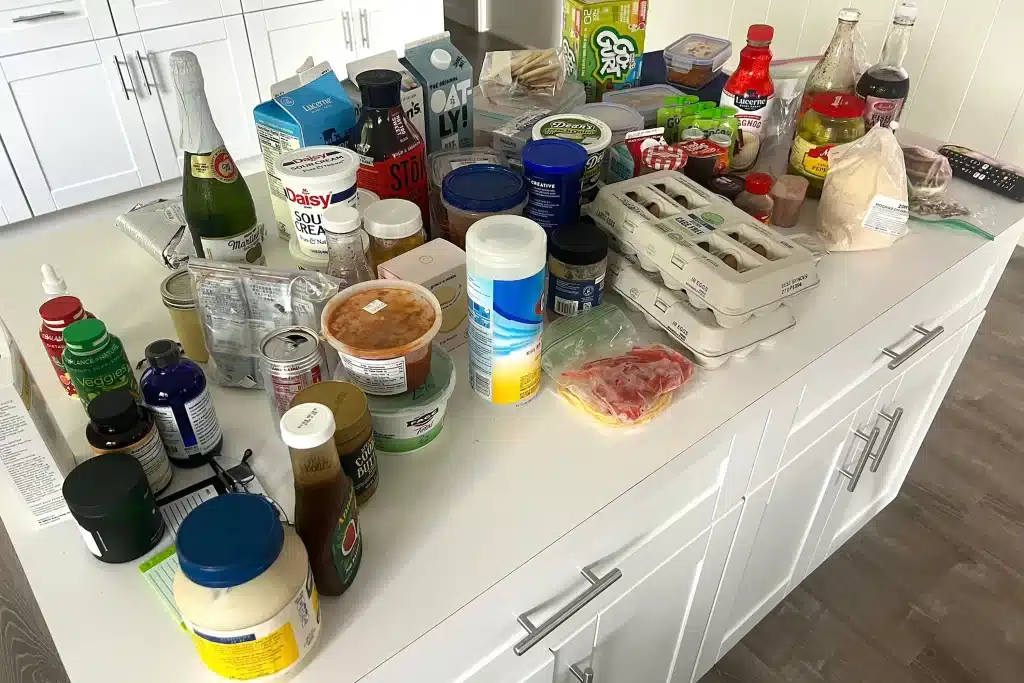
This is not a deep clean. You’re not pulling out shelves and scrubbing. You’re making decisions.
Open the fridge. What’s expired? What got pushed to the back and forgotten? What’s not going to get eaten no matter how many times you tell yourself you’ll have it for lunch tomorrow?
Five minutes. That’s all this takes when you do it weekly. And here’s why it matters beyond just a tidy fridge: this is how you stop buying duplicates. When you can see what you actually have, you stop coming home from the grocery store with a third bottle of salsa because you couldn’t remember if you had any.
Do this before you grocery shop. Every week. Your fridge stays functional, your grocery bill stays sane, and you stop throwing away food you forgot you bought.
In Houston, there’s an extra reason to stay on top of this. We run our fridges hard — it’s warm eight months out of the year, we open the door constantly, and things degrade faster. That leftover from Tuesday? By Sunday in a Houston fridge, it’s done. Don’t let it become a science experiment in the back corner.
Reset #2: Sort and Recycle Accumulated Paper
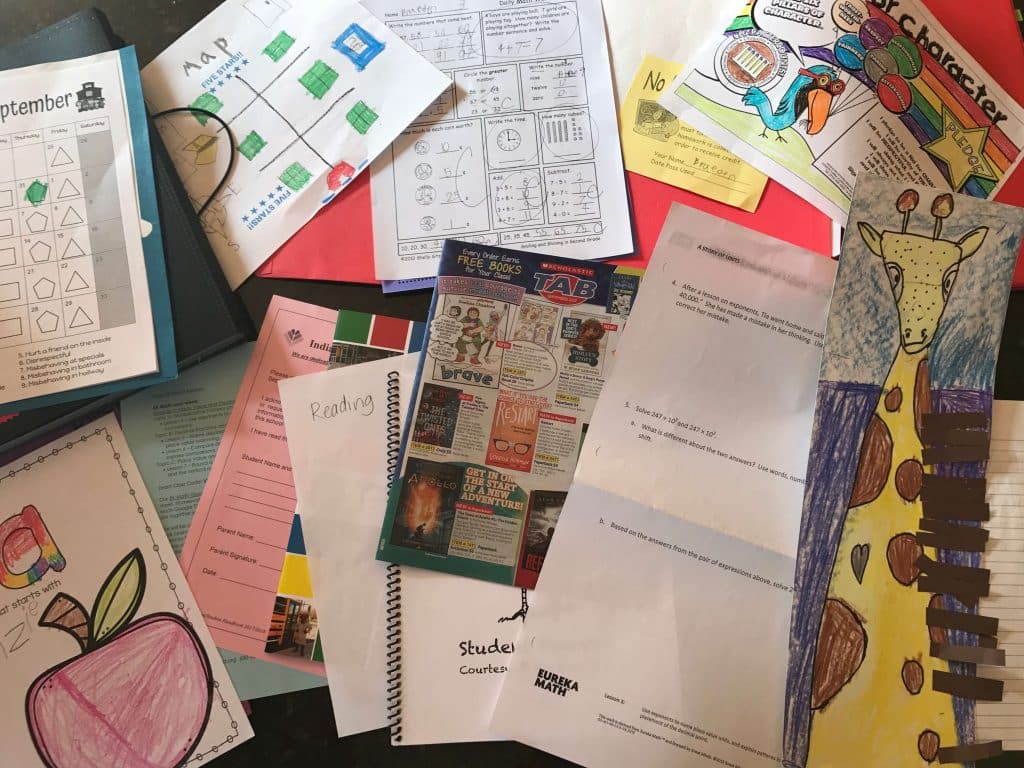
Paper is the fastest-multiplying clutter in any home. And nobody notices it until it’s everywhere.
Mail on the counter. Receipts in the junk drawer. School papers on the dining table. Flyers that came in the door. The insurance letter you need to read but haven’t. The coupon you’re saving for a store you haven’t been to in six months.
Left unchecked for even one week, paper takes over surfaces, fills drawers, and creates that low-level visual noise that makes your whole home feel cluttered even when everything else is fine.
The weekly habit: gather every piece of paper that accumulated during the week. Sort into three piles — act on it, file it, or recycle it. Most of it is recycle. Be honest with yourself about that.
The stuff that needs action? Do it now if it takes less than two minutes. If it takes longer, put it in one designated spot — not scattered across the house — and schedule time to deal with it.
The key here is having one — and only one — place where paper lives between processing. Not three piles on three different surfaces. One inbox. One folder. One spot. When paper has multiple homes, it has no home.
Reset #3: Put All Clean Laundry Away
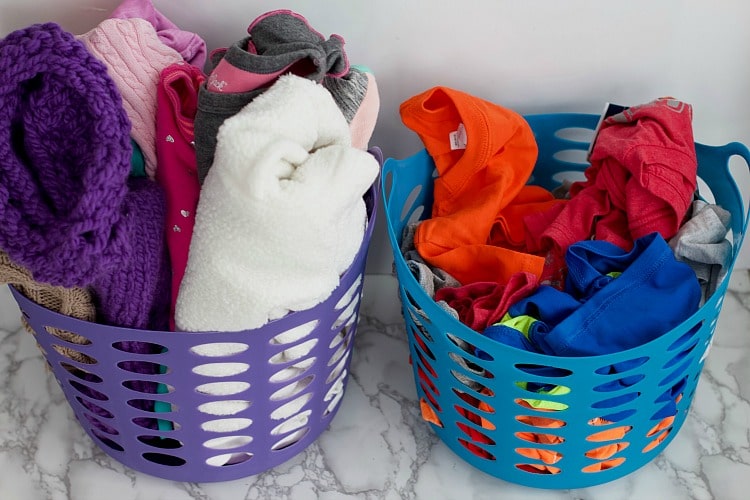
I’m going to be straight with you about this one.
The washing and drying is the easy part. Machines do that. The organizational breakdown happens after — when clean clothes come out of the dryer and don’t make it back to where they belong.
The basket on the bed. The pile on the chair. The stack on top of the dryer that’s been there since Tuesday. The “I’ll fold it later” that turns into “I’ll just pull from the basket this week.”
Sound familiar? Because I see this in almost every home I walk into. Clean laundry with no completion circuit. The clothes get washed. They get dried. And then they stall.
This isn’t laziness. It’s a flow problem. Somewhere between the dryer and the closet, there’s a bottleneck. Maybe the closet is too full to put things away easily. Maybe folding feels like a big task because it’s been building up all week. Maybe the dresser drawers are so packed that putting things in them is a fight.
The weekly reset: once a week, every piece of clean laundry gets folded and put away. Not most of it. All of it. The basket is empty. The chair is clear. The dryer is free.
If this takes longer than fifteen minutes, that’s a signal. It means either the laundry volume has gotten ahead of the system, or the storage on the other end — closet, drawers, shelves — needs attention. Both are fixable. But you won’t see the problem until you commit to completing the circuit every week.
Reset #4: Clear the Spot Where Everything Piles Up
Every home has one. You know exactly where yours is.
The dining table that hasn’t been eaten at in weeks because it’s covered in stuff. The chair in the bedroom that stopped being a chair and became a second closet. The end of the kitchen counter where things go to die. The landing strip at the top of the stairs.
This is different from the daily drop zone reset. The drop zone is by the front door — it’s where things enter. The catch-all zone is deeper in the house — it’s where things accumulate when they don’t have a home anywhere else.
And that distinction matters. Because the catch-all zone is telling you something specific: the items that keep piling up there have nowhere else to go. Or they do, technically, but getting them there is inconvenient enough that people default to the pile instead.
The weekly habit: clear it completely. Everything goes back to its actual home. If something doesn’t have a home, make a decision — find it one, donate it, or toss it.
Here’s the thing I want you to pay attention to: what keeps showing up in the catch-all zone every week? If it’s always mail, your paper processing system needs work. If it’s always kids’ stuff, the kid zones need more accessible storage. If it’s always random items from other rooms, the room scan isn’t catching everything.
The catch-all zone is a symptom. Clearing it weekly treats the symptom. Paying attention to what keeps appearing there leads you to the cure.
Reset #5: Restock Low Supplies and Rotate Older Items Forward

This one sounds boring. It is boring. It’s also the one that prevents those panicked runs to the store and the duplicate-buying that clutters up your storage.
Once a week, do a quick scan of the things that run out regularly. Toiletries. Cleaning products. Pantry staples. Trash bags. Paper towels. Whatever your household goes through consistently.
What’s low? Add it to the list. What’s been sitting in the back unopened while a newer version sits in front? Rotate it forward.
This is an organizing task, not a shopping task. You’re not buying anything yet. You’re assessing inventory and making sure what you have is accessible and in order.
I wrote a whole blog post about why people keep buying duplicate kitchen items, and the answer almost always comes back to this: they couldn’t see what they already had. Spices three rows deep. Cleaning products buried under the sink. Pantry items pushed to the back behind newer purchases.
Weekly restocking and rotating prevents all of that. You know what you have. You know what’s low. And you stop spending money on things that are already in your house somewhere.
Reset #6: Reset the Highest-Traffic Zone
Every home has a zone that takes more daily abuse than any other. For families with kids, it’s the playroom or the toy area. For people with hobbies, it’s the craft table or the workshop. For pet owners, it’s wherever the pet supplies live.
This is the zone that unravels fastest. It gets used every single day, things come out of bins and don’t go back, broken or outgrown items accumulate, and within a week it looks like a disaster even if it was perfectly organized seven days ago.
The weekly habit: reset it. Items back in their bins and containers. Broken things pulled out. Outgrown items flagged for donation. Surfaces cleared. System restored.
This isn’t about making it look perfect. It’s about keeping the system from collapsing entirely. High-traffic zones that go more than a week without a reset start to feel unmanageable. And once they feel unmanageable, people stop trying to maintain them at all. That’s when the zone becomes a permanent mess and the “I’ll deal with it eventually” sets in.
Don’t let it get there. Weekly reset. Fifteen minutes. The system holds for another week.
Pick a Day and Protect It
The daily resets work because they happen every day without thinking. The weekly resets need something different — they need a scheduled day.
Pick one. Sunday works for a lot of people. Or Saturday morning before things get busy. Or Wednesday evening to break up the week. Whatever fits your life.
The day matters less than the consistency. Same day every week. Non-negotiable. Put it on the calendar if you have to. Set a reminder. Tell your household.
Thirty minutes. Six resets. And your home goes into the next week with a clean slate instead of carrying last week’s unfinished business forward.
That’s The Calm Reset™ weekly rhythm.
Want a free, easy to follow primtable chart to help you follow the Calm Reset system in your home? You can download it here
When the Weekly Resets Reveal Something Bigger

If any of these weekly resets consistently takes longer than it should — if the fridge is always packed, the paper is always overwhelming, the laundry never completes, the catch-all zone refills within a day — that’s not a maintenance failure. That’s a system failure.
The weekly resets are designed to maintain systems that work. If the systems underneath are broken, maintenance alone won’t fix them. But the weekly resets will show you exactly where the breakdown is. Pay attention to which ones feel hardest. That’s where the real work needs to happen.
And that’s what I do. I help people build the systems that make these weekly resets actually work — not just for a week, but for good. In person in Houston or virtually anywhere.
Schedule your consultation here or call 832-271-7608. More questions? Complete the form below and we’ll be in touch fast to answer them.
Serving Houston in-home & virtual organizing sessions anywhere.
Restoring Your Sanity, Clarity & Time™

Working with Taya and her team is easy. You can book an appointment easily on her website, or contact her directly at 832-271-7608
- How to Organize Shoes, Bags, and Accessories in Your Closet - September 1, 2026
- 7 Organization Tips to Streamline School Mornings - August 25, 2026
- The 30-Minute Fall Reset: A Strategic Habit to Organize Your Busy Season - August 20, 2026